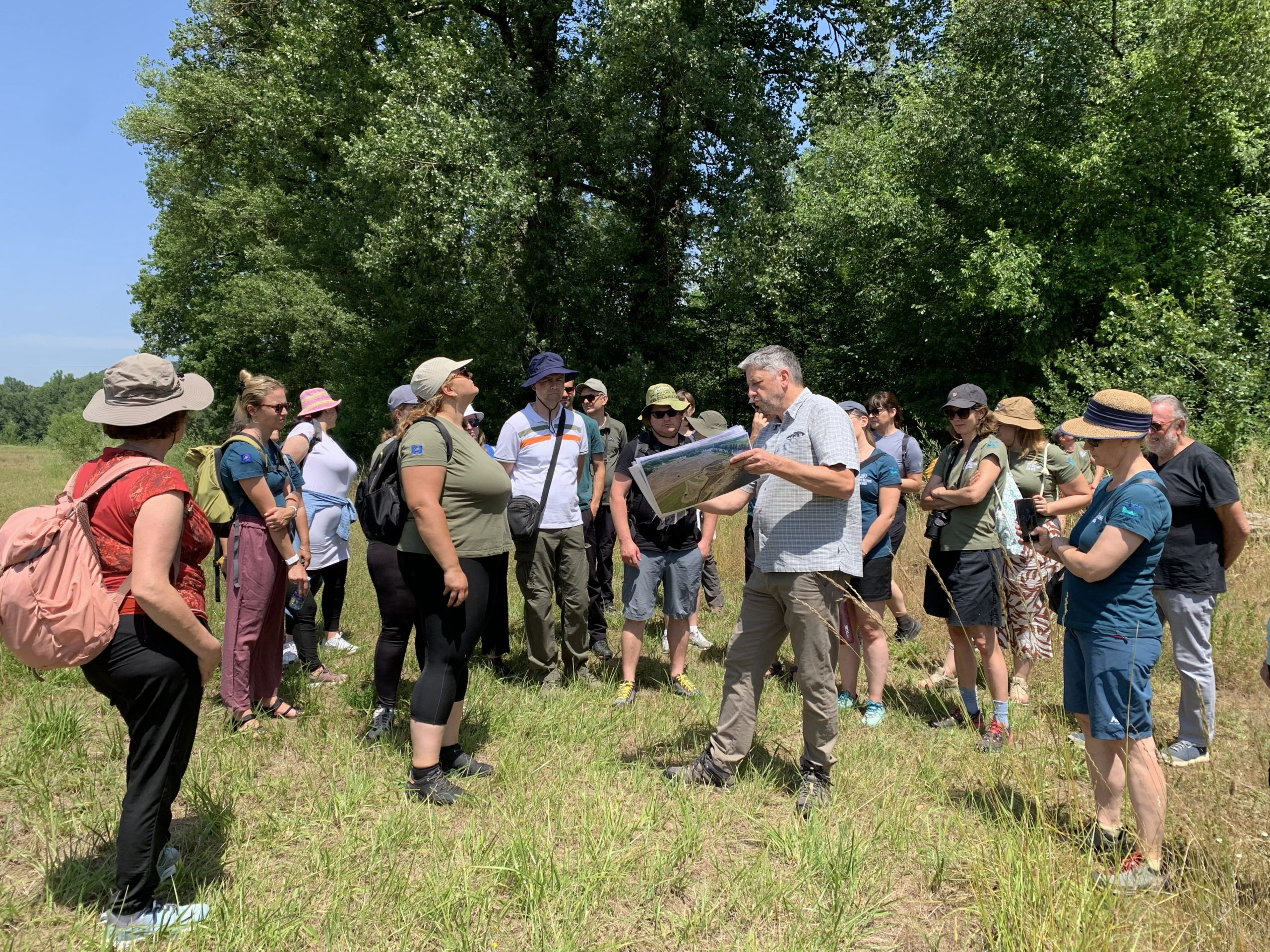
From 16 to 18 June 2026, the LIFE Dordogne River programme welcomed a European delegation of around forty participants who came to visit several restored sites in the Dordogne Valley. This study visit formed part of an exchange between two UNESCO Biosphere Reserves involved in European LIFE projects dedicated to the restoration of freshwater ecosystems.
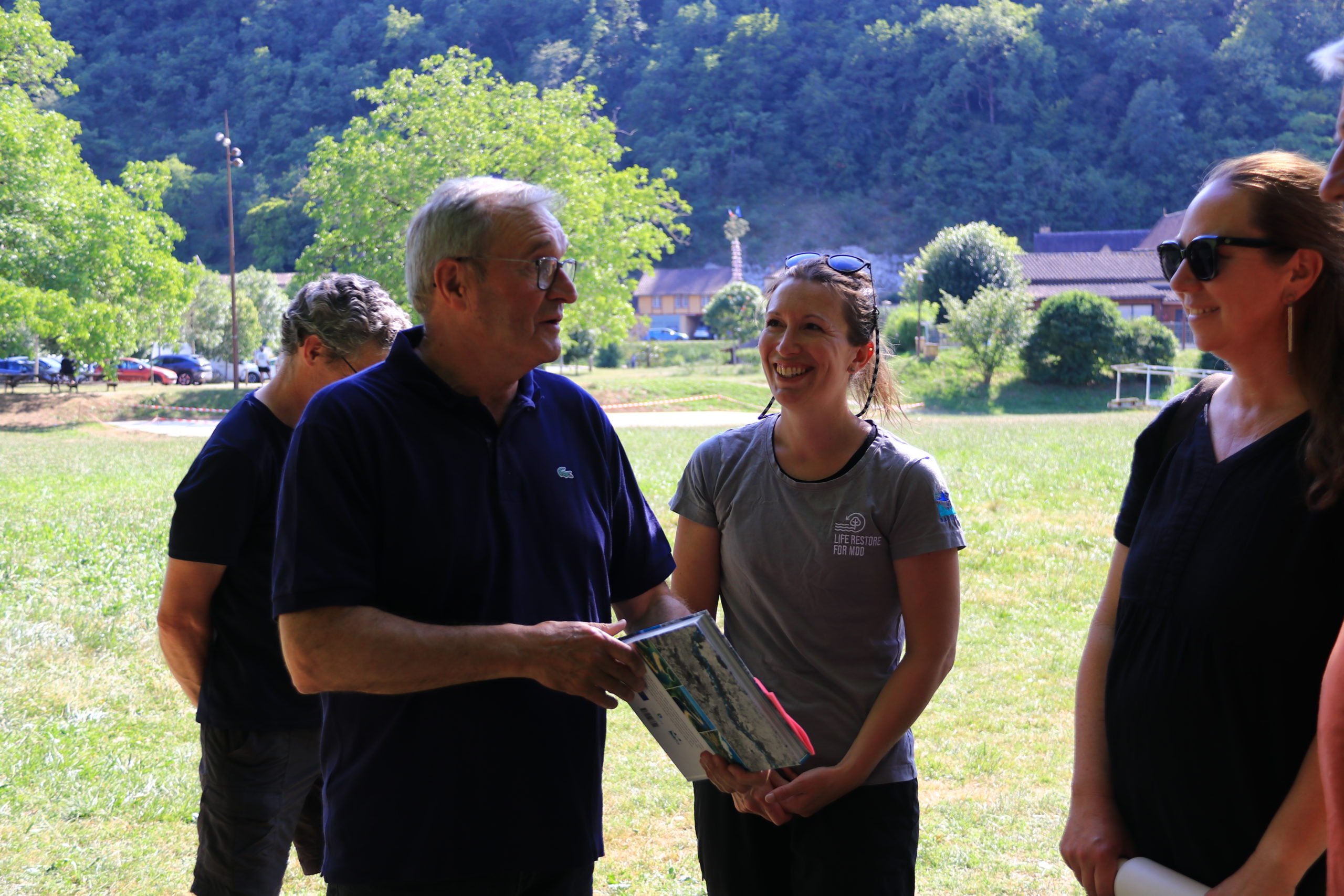
The delegation, made up of project officers, scientists and managers involved in the LIFE RESTORE for MDD project, visited several flagship restoration sites to gain a better understanding of the actions implemented in the Dordogne River basin and the lessons that can be shared across Europe.
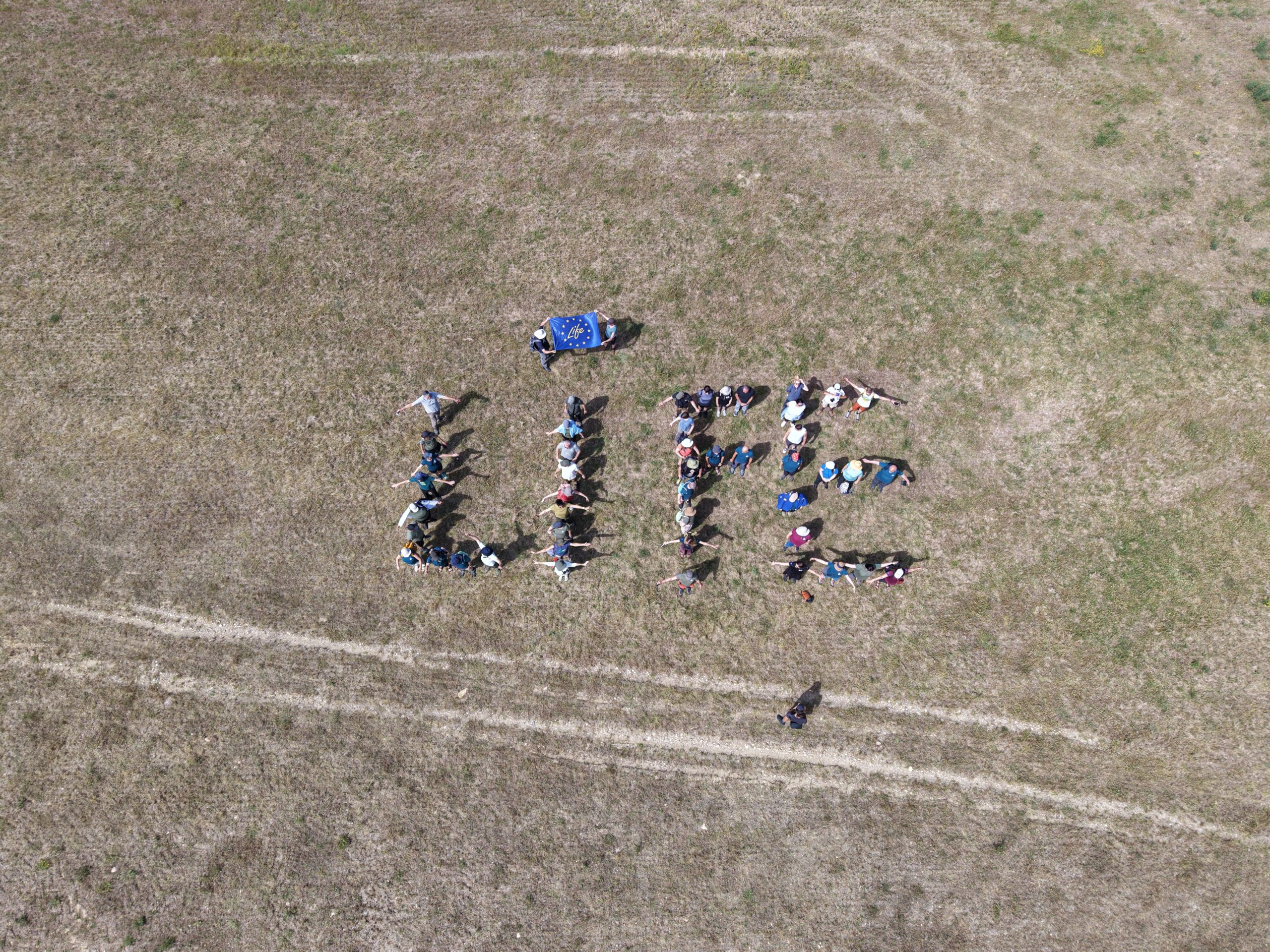
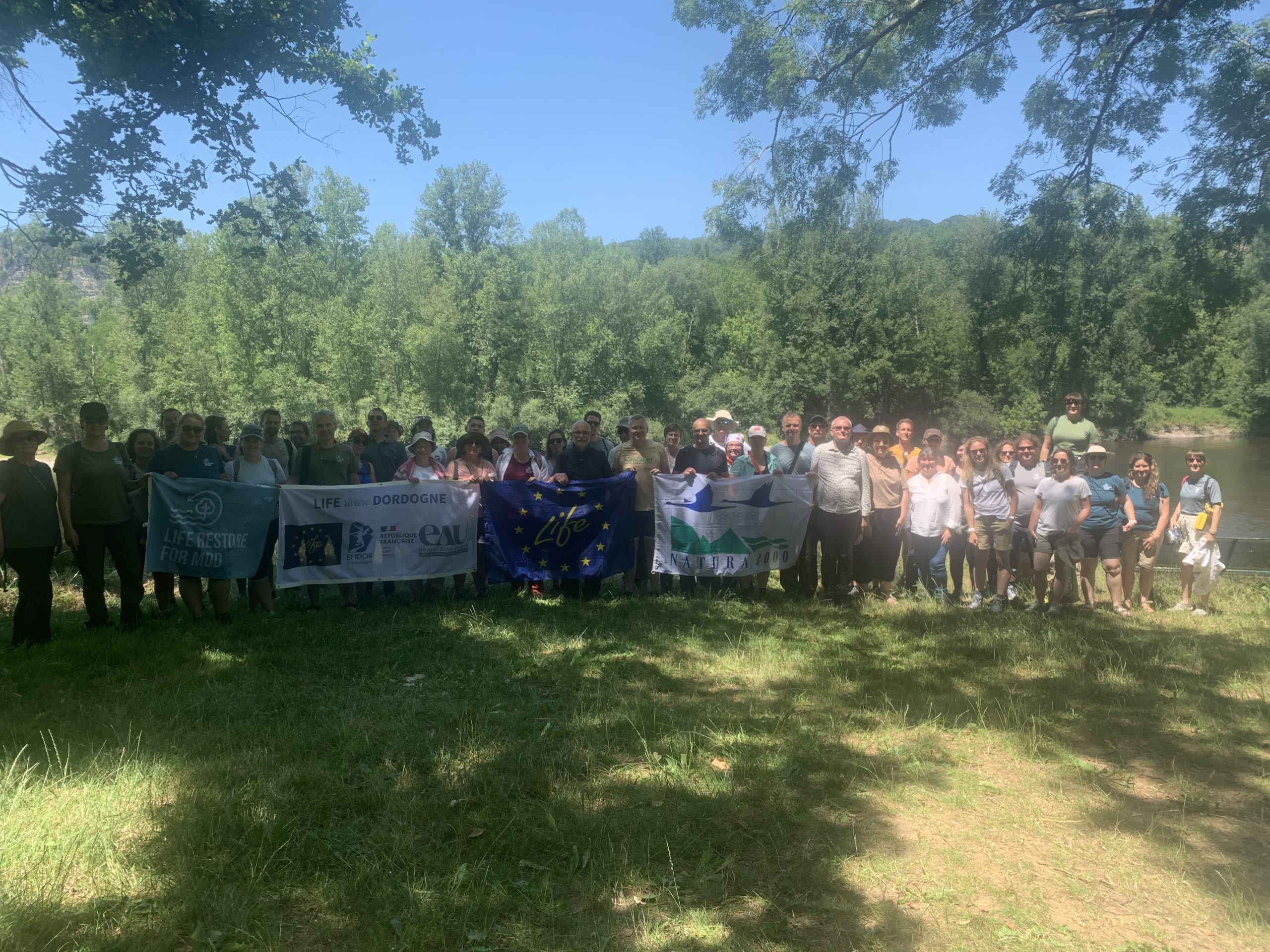
Participants in the study visit gathered in the Dordogne Valley to highlight Europe’s commitment to the restoration of freshwater ecosystems. © EPIDOR
Two LIFE Projects Working for Europe’s Major Rivers
The LIFE RESTORE for MDD project operates within Europe’s largest wetland, often referred to as the « Amazon of Europe », in the transboundary UNESCO Biosphere Reserve « Mura-Drava-Danube », which stretches across five countries: Austria, Slovenia, Croatia, Hungary and Serbia.
This ambitious project aims to restore and protect 336 hectares of floodplains along more than 700 kilometres of rivers. Like the LIFE Dordogne River programme, it focuses on the interactions between river dynamics, biodiversity, human activities and their impacts on river evolution.
Beyond the similarities between the two projects, the meeting aimed to encourage the exchange of experience between river managers facing common challenges in ecological restoration and stakeholder engagement.
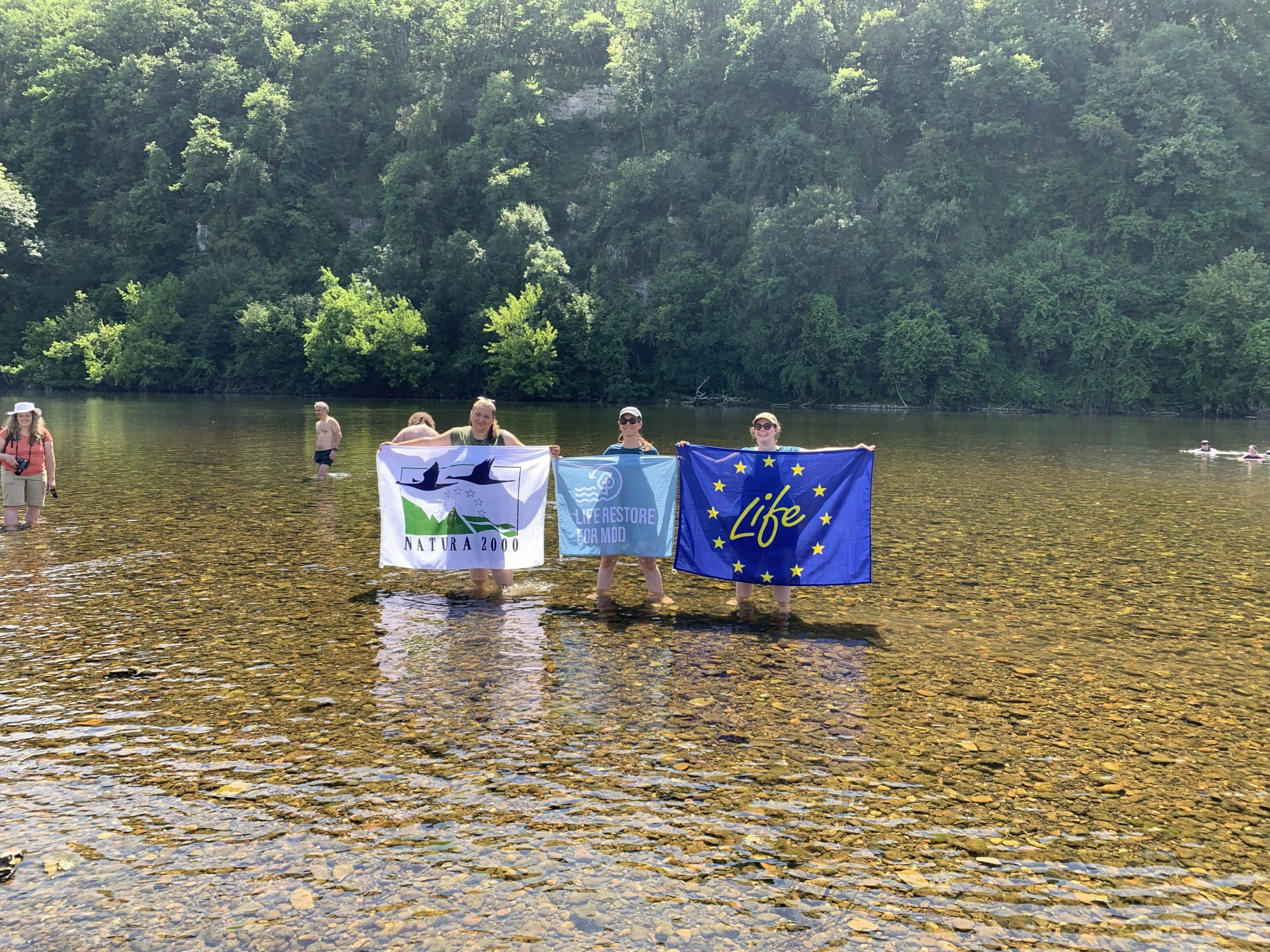
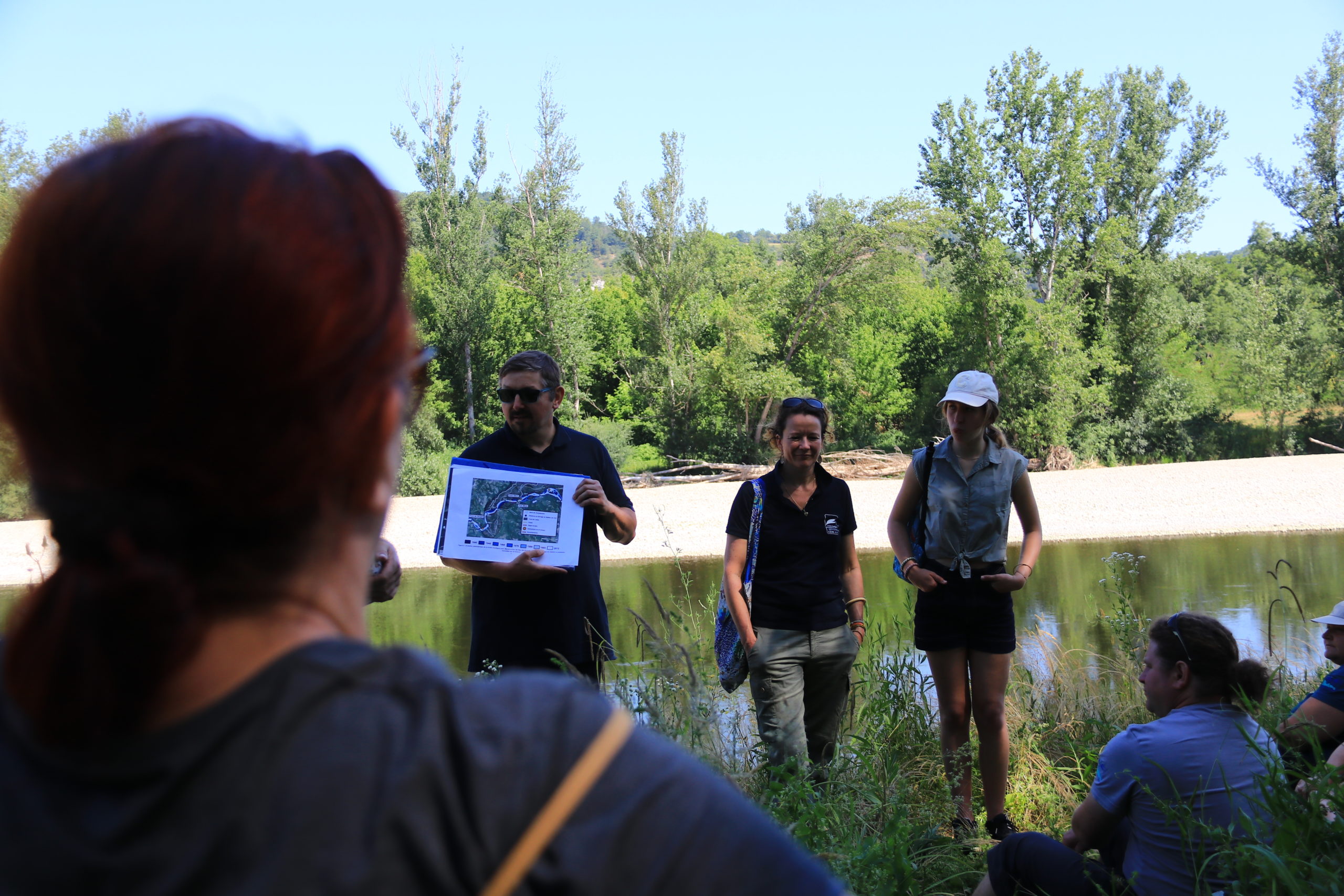
Representatives of the LIFE projects and the Mura-Drava-Danube Biosphere Reserve on the banks of the Dordogne River. © EPIDOR
Discovering River Restoration Actions in the Dordogne Basin
The visit began within the Dordogne Basin UNESCO Biosphere Reserve with a presentation of the territory and the LIFE Dordogne River programme.
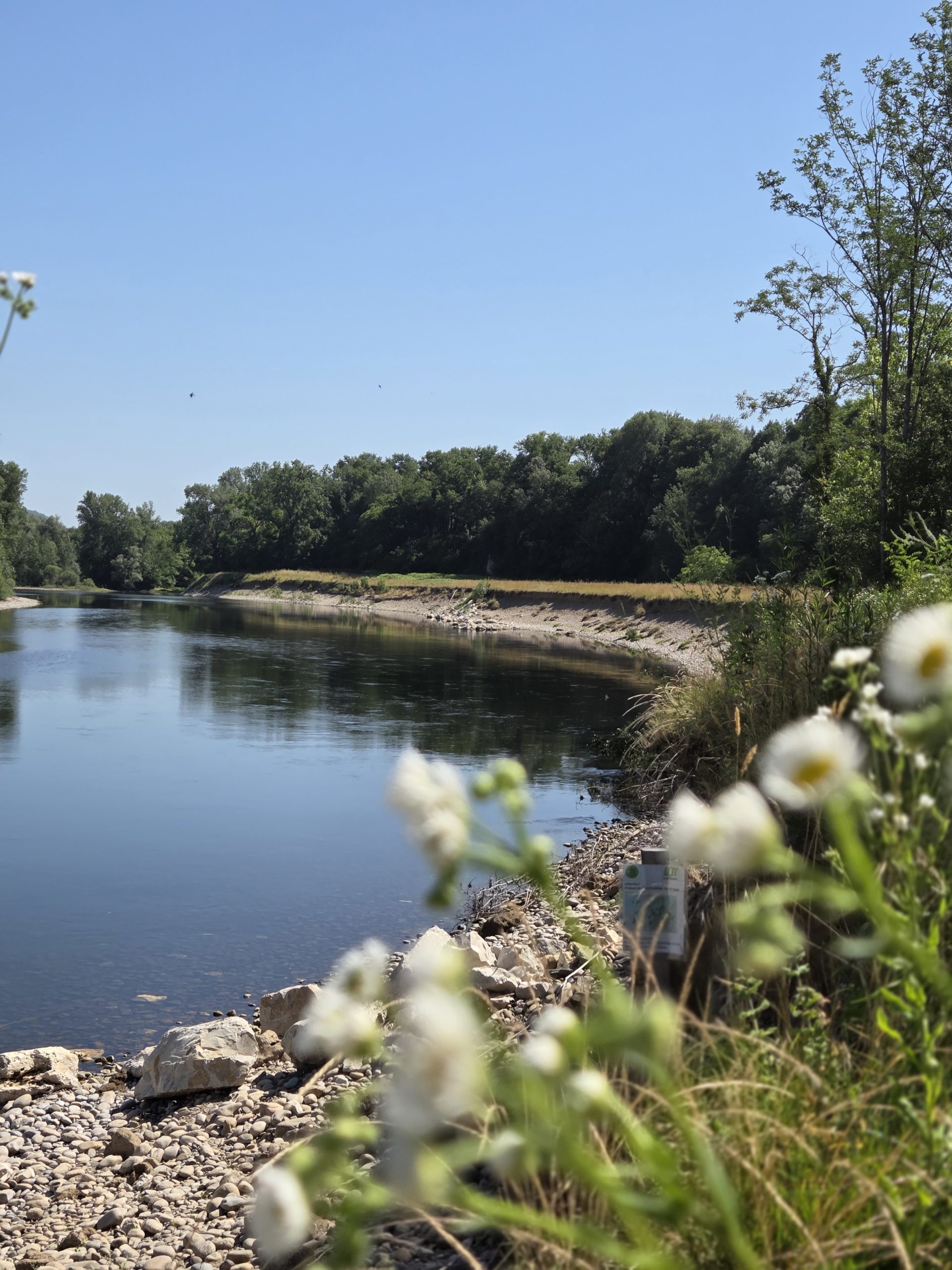
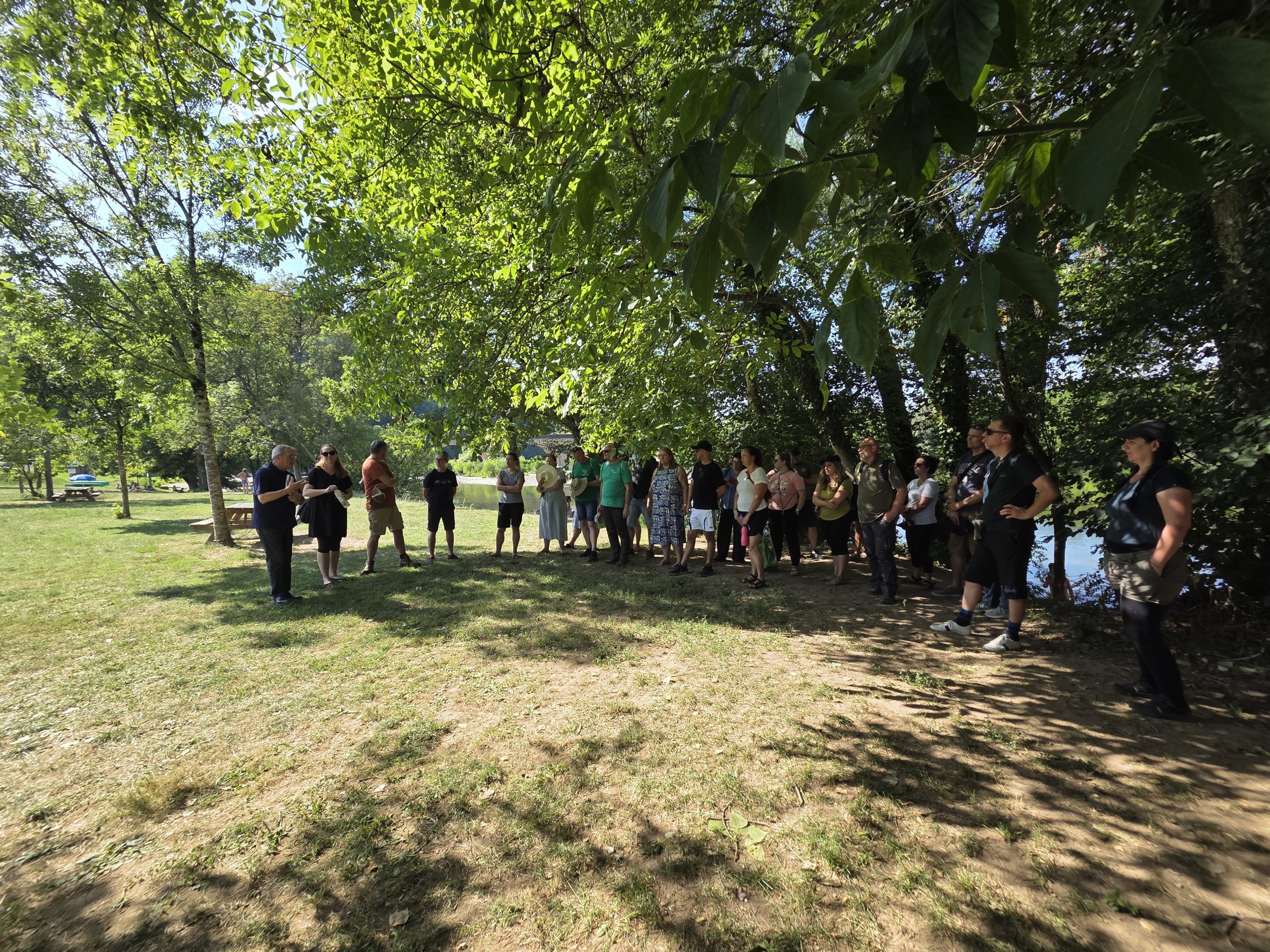
Participants then visited several sites restored in recent years. At Maison-Neuve, located in the municipalities of Saint-Chamassy and Le Buisson-de-Cadouin (Dordogne Department), they observed the ecological restoration of a former gravel pit completed in 2024. Flood channels, an oxbow channel and an alluvial meadow now provide favourable habitats for numerous species dependent on the Dordogne River.
The following day, the delegation visited the Sous-Castel site in Floirac (Lot Department). This flagship restoration project involved removing nearly 640 metres of rock bank protection installed during the 1980s in order to restore greater freedom for the river to evolve naturally. Discussions focused on the impacts of bank protection on river processes, the challenges of local acceptance of bank erosion, and the land management tools used to support the Dordogne’s natural channel mobility.
In the afternoon, participants continued their visit at the Pontou side channel (Floirac, Lot), which was restored to reconnect several secondary river channels and now also serves as an educational site for environmental awareness activities with pupils from the nearby primary school in Vayrac.
Sharing Successes as Well as Methodologies
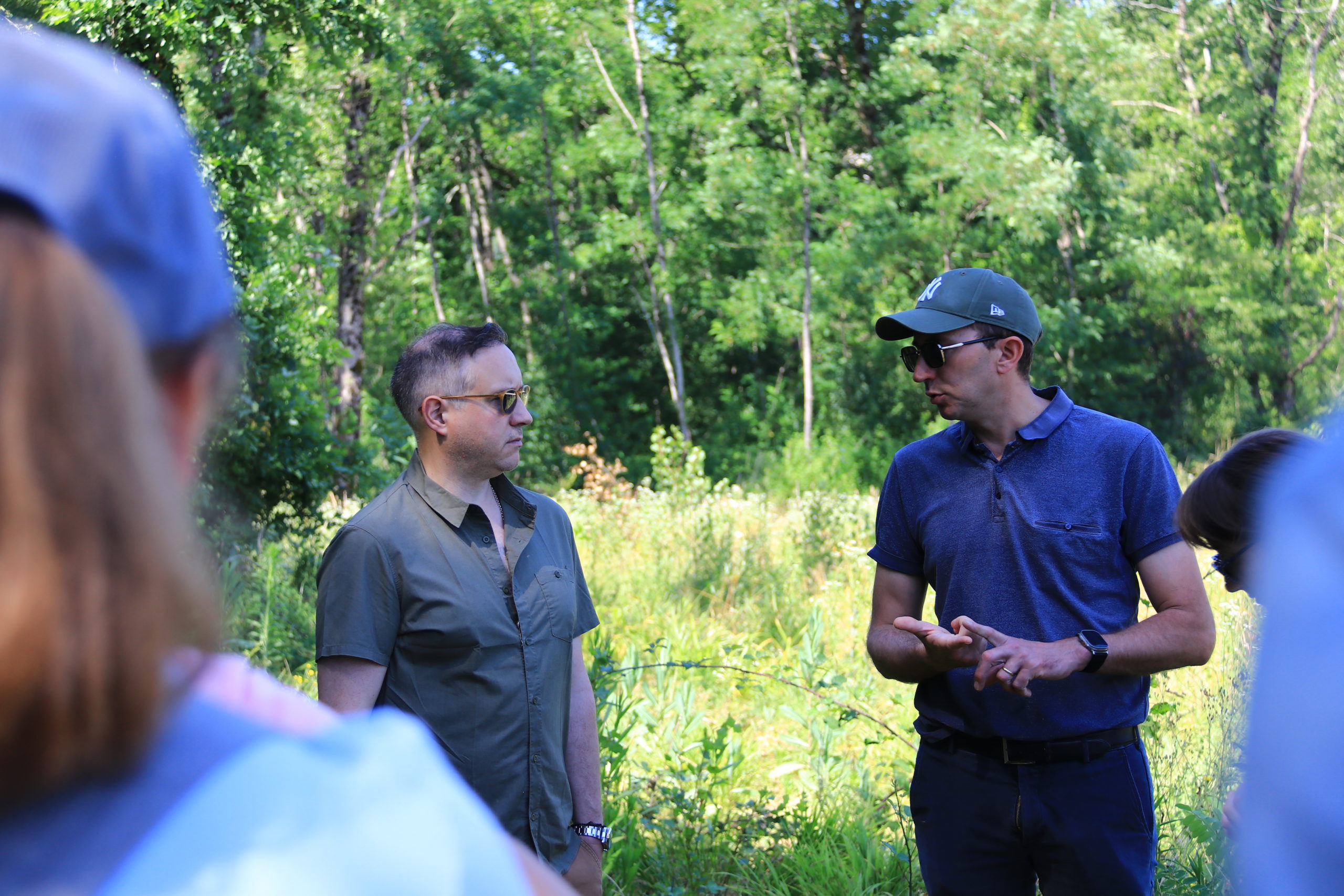
Beyond the technical achievements, the LIFE RESTORE for MDD partners showed strong interest in the methodologies developed through the LIFE Dordogne River programme.
Discussions covered the design of restoration projects, the monitoring of their ecological effectiveness, as well as stakeholder consultation, public awareness and local engagement approaches, particularly regarding the key issue of land ownership and land acquisition.
This is one of the distinctive features of the LIFE Dordogne River programme: its restoration actions are designed as demonstration and pilot projects. The knowledge generated, the observed results and the lessons learned contribute to informing river managers and scientific communities well beyond the Dordogne River basin.
European Cooperation to Advance River Restoration
LIFE projects play a vital role in developing and sharing innovative solutions for the conservation of Europe’s biodiversity.
By welcoming this international delegation, the LIFE Dordogne River programme reaffirms its contribution to this collective European effort. The exchanges held over these three days will help enrich restoration practices across Europe and strengthen cooperation between territories committed to preserving and restoring major river systems.
As the challenges facing rivers extend far beyond administrative boundaries, sharing experience remains one of the most effective ways to accelerate the recovery of Europe’s freshwater ecosystems.
Sur le même sujet
Visite guidée du bras mort de la Croix-Bernède en présence d’enfants du centre de loisirs de Rauzan
Le mercredi 11 septembre 2024, en partenariat avec la communauté des communes Castillon-Pujols, EPIDOR a accompagné des enfants du centre de loisirs de Rauzan pour une animation nature le long du bras mort de la Croix-bernède, sur la commune de Pessac-sur-Dordogne....
Visite guidée du bras mort de Pontou en présence de l’école primaire de Vayrac
Le vendredi 14 juin 2024, EPIDOR a accompagné des classes de l'école primaire de Vayrac pour une animation nature le long de la couasne de Pontou, sur les communes de Floirac et Saint-Denis-les-Martel. EPIDOR porte sur ce tronçon de la rivière Dordogne un projet de...
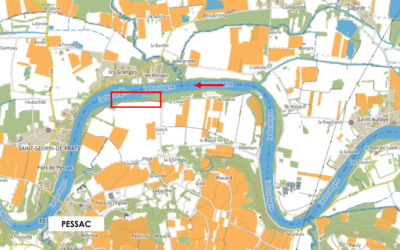
Présentation du projet de restauration écologique du bras de la Croix-Bernède aux riverains
Le mercredi 13 mars, EPIDOR avec le bureau d'étude BIOTEC, ont présenté aux riverains de la commune de Pessac-sur-Dordogne le projet de restauration écologique du bras de la Croix-Bernède. EPIDOR est le maitre d’ouvrage de ces opérations qui sont visées à partir de...
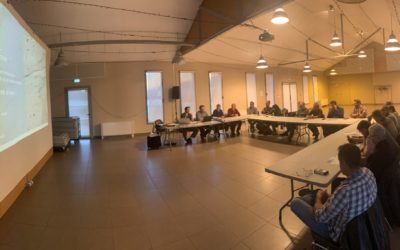
Présentation du projet de restauration écologique du bras mort de Pontou
Le mercredi 13 mars, EPIDOR avec le bureau d'étude BIOTEC, ont présenté aux riverains des communes de Floirac et Saint-Denis-les-Martel le projet de restauration écologique du bras mort de Pontou. EPIDOR est le maitre d’ouvrage de ces opérations qui sont visées à...
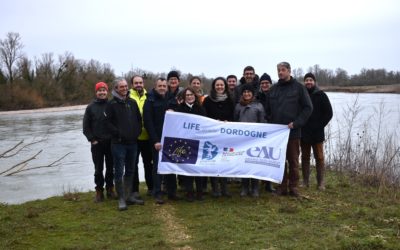
Atelier « Grands cours d’eau » #3/4 : Stratégies d’action, enjeux fonciers et mobilisation des acteurs
Le troisième atelier du cycle s’est déroulé sur le territoire de l’EPTB Saône et Doubs du 23 au 24 janvier à Dôle (39) et portait sur les stratégies d'action.Dans le cadre du projet LIFE, l’Association Nationale des Elus des Bassins (ANEB) organise un cycle de 4...
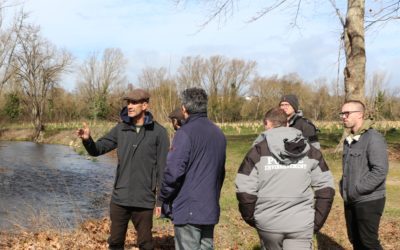
Atelier « Grands cours d’eau » #2/4 : Diagnostic: principales étapes, données, méthodes et outils
Le second atelier s’est déroulé sur le territoire de l’EPTB Aude (SMMAR) du 9 au 10 mars 2023, à la mairie de Trèbe, et portait sur l'importance de la construction d'un diagnostic avant de mener une stratégie sédimentaire.Dans le cadre du projet LIFE, l’Association...
Journée d’information du programme LIFE à la Foire du Gabarier
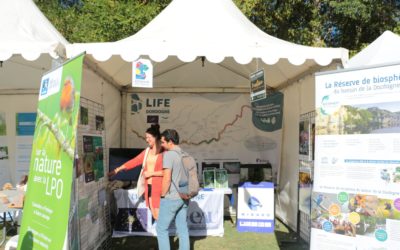
La quatrième édition de la Foire du Gabarier s'est tenue le samedi 17 septembre à Castelnaud-la-Chapelle, avec une présentation du projet LIFE rivière Dordogne par l'équipe d'EPIDOR . Stand de présentation du projet LIFE, © EPIDORLa Foire du Gabarier a réuni petits et...

Enquête sur l’image de marque de la vallée de la Dordogne
Dans le cadre du projet LIFE, EPIDOR lance une enquête publique afin d’identifier la place de la rivière dans l’image de marque de la vallée de la Dordogne. Ce questionnaire vise à mieux comprendre quelle symbolique et quelles valeurs sont associées à la Vallée de la...
Participation d’EPIDOR au colloque international « IS-RIVER » 2022
Du 30 juin au 4 juillet 2025 s’est tenue la 5ème édition du colloque international « IS-RIVER » à Lyon, avec une présentation conjointe d’EPIDOR et du bureau d’étude BIOTEC pour valoriser le projet LIFE rivière Dordogne. La conférence internationale I.S.Rivers porte...
Atelier « Grands cours d’eau » #1/4 : Enjeux, stratégie et évaluation de la gestion sédimentaire des cours d’eau
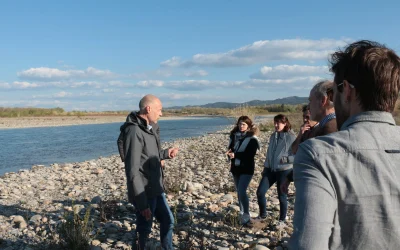
Le premier atelier du sycle s’est déroulé sur le territoire du SMAVD (l’EPTB Durance) du 4 au 5 avril 2022 et portait sur les enjeux de la gestion sédimentaire des cours d'eau.Dans le cadre du projet LIFE, l’Association Nationale des Elus des Bassins (ANEB) organise...